Paint Correction in Tacoma, WA

Remove swirl marks, scratches, and oxidation to restore your vehicle's factory-fresh finish. Professional machine polishing across the Puget Sound region.

Book Paint Correction

What Is Paint Correction?
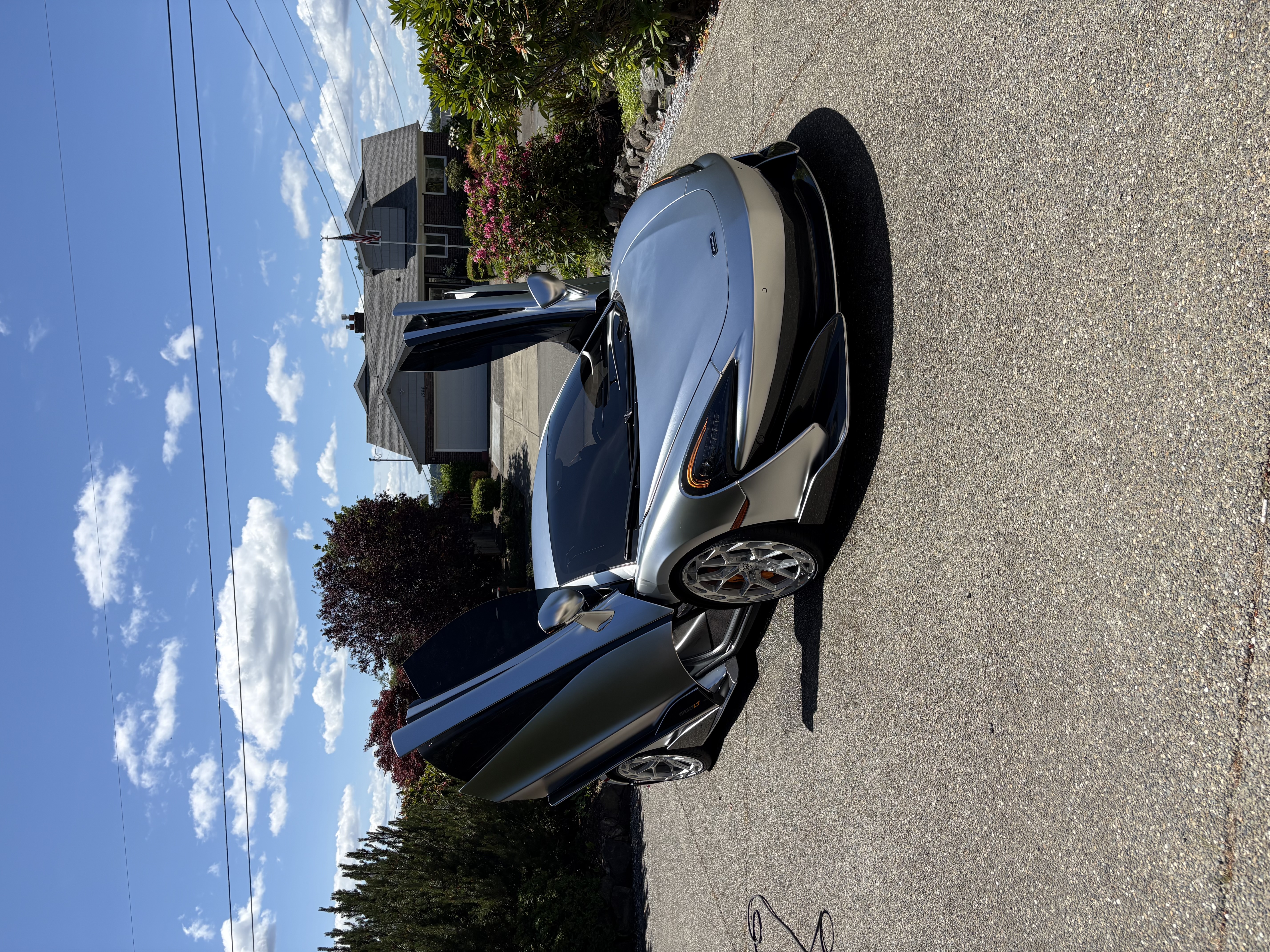
McLaren after professional multi-stage paint correction

Restoring What Time and Neglect Have Taken

Paint correction is the process of permanently removing surface-level defects from your vehicle's clear coat through controlled machine polishing. Swirl marks, fine scratches, water spot etching, oxidation, and haze are leveled and smoothed until the paint reflects light uniformly, producing that deep, wet, mirror-like finish that new cars have and older vehicles lose over time.

This is not a cover-up. Waxes and glazes fill scratches temporarily to hide them, but the damage remains underneath and reappears as soon as the filler product washes away. Paint correction physically removes a microscopic layer of clear coat to bring the surrounding surface level with the bottom of the scratch, eliminating the defect permanently. Done correctly with professional equipment and proper technique, paint correction transforms dull, scratched paint into a finish that looks better than new.

At Bernardone Auto Detailing, we use dual-action and rotary polishers with a range of cutting compounds, polishes, and finishing pads to address every level of paint damage. We measure clear coat thickness with a paint depth gauge before beginning any correction work, ensuring we never remove more material than is safe. Your paint's structural integrity is always our priority.
Why Pacific Northwest Vehicles Need Paint Correction

Vehicles driven in the Puget Sound region accumulate paint damage faster than those in drier, milder climates. Understanding the specific sources of damage helps you recognize when your vehicle needs professional correction.

Automated car washes are the number one cause of swirl marks on vehicles in the Tacoma and Seattle area. The spinning brushes at tunnel washes drag dirt, sand, and debris across your paint with every visit. Most people wash their cars more frequently during the rainy months, which means more trips through the car wash and more cumulative damage. After a year or two of regular car wash visits, most vehicles have thousands of micro-scratches covering every panel. These are invisible from a distance but clearly visible under direct sunlight or parking lot lights as a web of fine lines that dull the paint's reflection.

Water spot etching is extremely common in the Pacific Northwest. When water droplets sit on your paint and evaporate, the mineral content is left behind as a raised deposit. Over time, these minerals etch into the clear coat, leaving permanent marks that cannot be removed by washing alone. Tacoma's water supply and the mineral content in regional rainfall make this problem particularly aggressive. Vehicles parked outdoors without any paint protection develop severe water spot etching within a single rainy season.

Tree sap etching follows a similar pattern. When sap from Douglas fir, cedar, or alder trees lands on your paint and is not removed promptly, it bonds to the clear coat and creates a chemical reaction that etches into the surface. Even after the sap is removed, the etch mark remains as a dull spot or ring in the paint. Only machine polishing can level the surrounding paint to eliminate these marks.

Oxidation occurs when UV radiation breaks down the molecular structure of your clear coat over time. While the Pacific Northwest is known for its overcast skies, the summer months bring extended hours of intense sunlight that catch unprotected paint off guard. Older vehicles, especially those with single-stage paint or neglected clear coats, develop a chalky, faded appearance that makes the vehicle look years older than it actually is. Paint correction removes the oxidized layer and reveals the healthy paint underneath.

Two-Stage vs. Three-Stage Paint Correction

Not every vehicle needs the same level of correction. We offer two tiers based on the severity of your paint's condition, and we will always recommend the option that matches your vehicle's actual needs.

Two-Stage Correction — $599+

Two-stage correction uses a cutting compound followed by a refining polish to remove moderate to heavy swirl marks, scratches, water spot etching, and oxidation. The cutting stage levels the clear coat to eliminate defects, while the refining stage produces a smooth, high-gloss finish. This process typically removes up to 90% of surface defects.

Two-stage is the right choice for most daily drivers in the Tacoma and Seattle area that have accumulated damage from car washes, road grime, and environmental exposure. Every two-stage correction includes a complete exterior deep detail, full decontamination, a panel prep wipe, and a 6-month paint sealant to protect your freshly corrected finish.

This level of correction is also included in our 3-year and 5-year ceramic coating packages because your paint must be corrected before a coating is applied. Any defects left in the paint before coating will be permanently locked under the coating layer.

Three-Stage Correction — $899+

Three-stage correction is our most thorough paint restoration process: heavy cutting, polishing, and jeweling. The first stage uses an aggressive cutting compound to remove deep swirl marks, heavy scratches, severe water spot etching, and oxidation. The second stage polishes the surface smooth. The third stage jewels the finish to a flawless, mirror-like show-car quality that removes up to 95% of all defects.

Three-stage correction is necessary for vehicles with heavy damage from years of automated car wash use, deep scratches visible to the naked eye, severe oxidation on older vehicles, and paint that has never been professionally corrected. Every three-stage correction includes a complete exterior deep detail, full decontamination, a panel prep wipe, and a 12-month ceramic sealant for lasting protection.

This is the option we recommend for luxury vehicles, sports cars, and any vehicle where a show-car finish is the goal. We always measure clear coat thickness before and during the process to ensure safe material removal.

Our Paint Correction Process

Paint correction requires precision, patience, and the right equipment. Here is our step-by-step approach that delivers consistent, high-quality results on every vehicle.

1. Thorough Wash & Decontamination

The vehicle receives a full hand wash, iron fallout remover application, and clay bar treatment to remove all bonded surface contaminants. Any particle left on the paint during polishing will cause additional scratches, so this decontamination step is non-negotiable.

2. Paint Depth Measurement

Using a digital paint thickness gauge, we measure clear coat depth on every panel. This tells us exactly how much material is available to work with and ensures we never thin the clear coat to an unsafe level. We document readings before, during, and after correction.

3. Test Spot

Before polishing the entire vehicle, we perform a test spot on a section of the hood or fender. This allows us to determine the optimal compound, pad, and machine setting combination for your specific paint type and hardness. Different manufacturers use different paint formulations, and what works on Toyota paint will not necessarily work on BMW paint.

4. Cutting Stage

Working panel by panel, we use a dual-action or rotary polisher with the appropriate cutting compound to level the clear coat and remove defects. Each section is polished under controlled lighting to verify defect removal before moving to the next area. This is the most time-intensive step.

5. Refining Stage

A finishing polish with a softer pad removes the micro-marring created by the cutting stage and brings the paint to its maximum clarity and gloss. This is where the mirror-like reflection emerges. Under inspection lighting, the paint should show zero haze, zero swirls, and perfect light reflection.

6. IPA Wipe & Protection

An isopropyl alcohol wipe removes all polishing oils from the surface, revealing the true corrected finish without any fillers masking remaining defects. Once verified, we apply your chosen protection: sealant, wax, or ceramic coating. We strongly recommend ceramic coating after correction to preserve your investment for years.

The Transformation: What to Expect

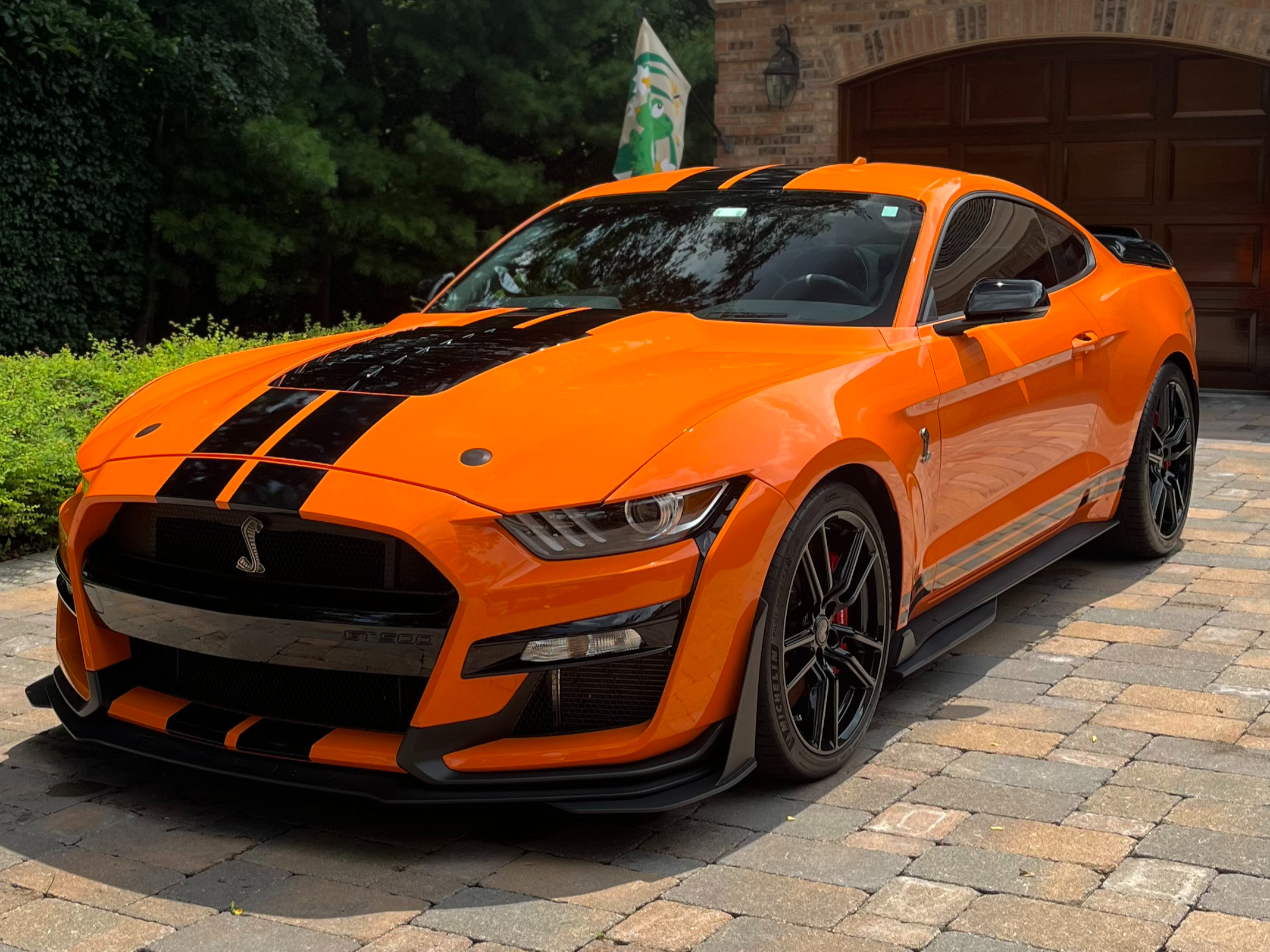
Ford GT500 with mirror-like paint finish after professional paint correction

Results You Can See and Feel

The difference between corrected and uncorrected paint is dramatic and immediately visible. Under direct lighting, uncorrected paint shows a chaotic web of scratches that scatter light in every direction, producing a hazy, dull appearance. After correction, light reflects uniformly off the surface in a single, crisp image, like a mirror.

On dark-colored vehicles, especially black, dark blue, and deep red, the transformation is most striking. These colors show every defect under light, and they also show the most dramatic improvement after correction. A corrected black vehicle has a depth of reflection that looks like you could reach into the paint. It is the kind of finish that makes people stop and stare in a parking lot.

On lighter colors like white, silver, and light gray, the improvement manifests as enhanced gloss, cleaner reflections, and a more vibrant, saturated color. While swirl marks are less visible on light colors to begin with, the overall finish quality improves substantially after correction. The paint looks newer, cleaner, and more premium.

Beyond appearance, corrected and protected paint is smoother to the touch. Running your hand across a clay-barred and polished surface feels like glass compared to the rough, gritty texture of contaminated and scratched paint. That smoothness also translates to better water shedding, easier cleaning, and less dirt accumulation between washes, something every Puget Sound driver appreciates during the rainy months.

Paint Correction Pricing

Pricing depends on vehicle size, paint condition, and the level of correction required. We provide an accurate quote after inspecting your vehicle's paint. All paint correction includes a full wash, decontamination, and clay bar treatment. We serve Tacoma, Seattle, and the entire Puget Sound area.

Two-Stage Paint Correction

$599+
  • Complete exterior deep detail (wheels, wheel wells, tires, foam pre-wash, bug and tar removal, foam bath + two-bucket hand wash, door jambs cleaned)
  • Full decontamination (iron remover, tar removal, clay bar)
  • Two-stage machine correction (cutting + refining)
  • Panel prep wipe
  • 6-month paint sealant
  • Removes up to 90% of swirls, scratches, and oxidation
Book Now

Three-Stage Paint Correction

$899+
  • Complete exterior deep detail (wheels, wheel wells, tires, foam pre-wash, bug and tar removal, foam bath + two-bucket hand wash, door jambs cleaned)
  • Full decontamination (iron remover, tar removal, clay bar)
  • Three-stage machine correction (heavy cutting + polishing + jeweling)
  • Panel prep wipe
  • 12-month ceramic sealant
  • Removes up to 95% of swirls, scratches, and oxidation — show-car finish
Book Now

Paint Correction FAQ

How do I know if my car needs paint correction?

The easiest way to check is to look at your paint under direct sunlight or a bright LED light. If you see a web of fine lines, circular marks, or haze that dulls the reflection, your paint has swirl marks and scratches that only machine polishing can remove. If you have ever used an automated car wash regularly, your paint almost certainly has significant swirl damage. We offer free paint inspections at your location anywhere in the Puget Sound area.

Will paint correction damage my clear coat?

When performed by a trained professional with proper equipment and technique, paint correction is completely safe. We measure clear coat thickness before starting and monitor it throughout the process to ensure we never remove more material than necessary. Modern vehicles have clear coat ranging from 40 to 80 microns thick, and a typical correction removes only 2 to 5 microns. Your clear coat remains fully functional and protective after correction.

How long does paint correction last?

The correction itself is permanent because the defects are physically removed, not filled or covered. However, your paint will accumulate new scratches and swirl marks over time through washing, driving, and environmental exposure. To maintain your corrected finish, we strongly recommend applying a ceramic coating immediately after correction. A ceramic coating protects the corrected surface from new damage and keeps it looking perfect for 1 to 5 years depending on the coating tier you choose.

Should I get paint correction before ceramic coating?

Absolutely, and it is not optional. Ceramic coating locks in whatever is on your paint at the time of application. If you apply a coating over swirled, scratched paint, those defects are sealed under the coating and cannot be removed without stripping the entire coating first. Every ceramic coating package at Bernardone includes at minimum a single-stage correction to ensure your paint is clean, smooth, and defect-free before the coating bonds to it.

Bring Your Paint Back to Life

Swirl marks, scratches, and oxidation are not permanent. Professional paint correction restores the finish your vehicle had when it was new. Book your correction today and see the transformation for yourself.

Book Paint Correction